Italian Food Menu Guide: Understanding Traditional Courses & Authentic Dishes
Published on December 1, 2025 • 10 min read
In This Guide
Walking into an authentic Italian restaurant and understanding the menu can feel overwhelming if you're not familiar with Italian dining traditions. Unlike American restaurants where dishes are categorized simply as appetizers, entrees, and desserts, a traditional Italian food menu follows a structured progression of courses, each designed to complement the others.
At Sal De Forte's Ristorante, we've been serving authentic Italian cuisine to Ewing Township, Princeton, and Trenton since 1985. In this comprehensive guide, we'll walk you through the structure of an Italian food menu, explain each course, and help you discover the traditional dishes that make Italian cuisine one of the most beloved in the world.
What Is an Italian Food Menu?
An Italian food menu is organized around the traditional Italian meal structure, which has been refined over centuries. Unlike the American custom of ordering one large main course, Italian dining is about experiencing multiple smaller courses, each highlighting different flavors and textures.
This approach to dining reflects the Italian philosophy that meals are meant to be savored slowly, enjoyed with family and friends, and experienced as a journey through complementary flavors. The meal progresses from lighter dishes to heartier ones, with pasta serving as a bridge between appetizers and the main protein course.
The Traditional Italian Meal Structure
A complete Italian food menu typically includes five main courses, though most diners choose two to three courses for a satisfying meal:
- 1.Antipasti (Appetizers) – Light starters to awaken the palate
- 2.Primi (First Course) – Pasta, risotto, gnocchi, or soup
- 3.Secondi (Second Course) – The main protein: meat or fish
- 4.Contorni (Side Dishes) – Vegetables or salads alongside secondi
- 5.Dolci (Desserts) – Sweet endings like tiramisu or cannoli
Antipasti: Italian Appetizers
The word "antipasti" literally means "before the meal." These are light, flavorful dishes designed to stimulate the appetite without filling you up before the main courses arrive.
Popular Antipasti on an Italian Food Menu
- Bruschetta – Toasted bread topped with fresh tomatoes, garlic, basil, and olive oil
- Caprese Salad – Fresh mozzarella, ripe tomatoes, and basil drizzled with olive oil
- Calamari Fritti – Lightly battered and fried squid with marinara sauce
- Antipasto Misto – A selection of cured meats, cheeses, olives, and marinated vegetables
- Shrimp Ceviche – Fresh shrimp marinated in citrus with herbs
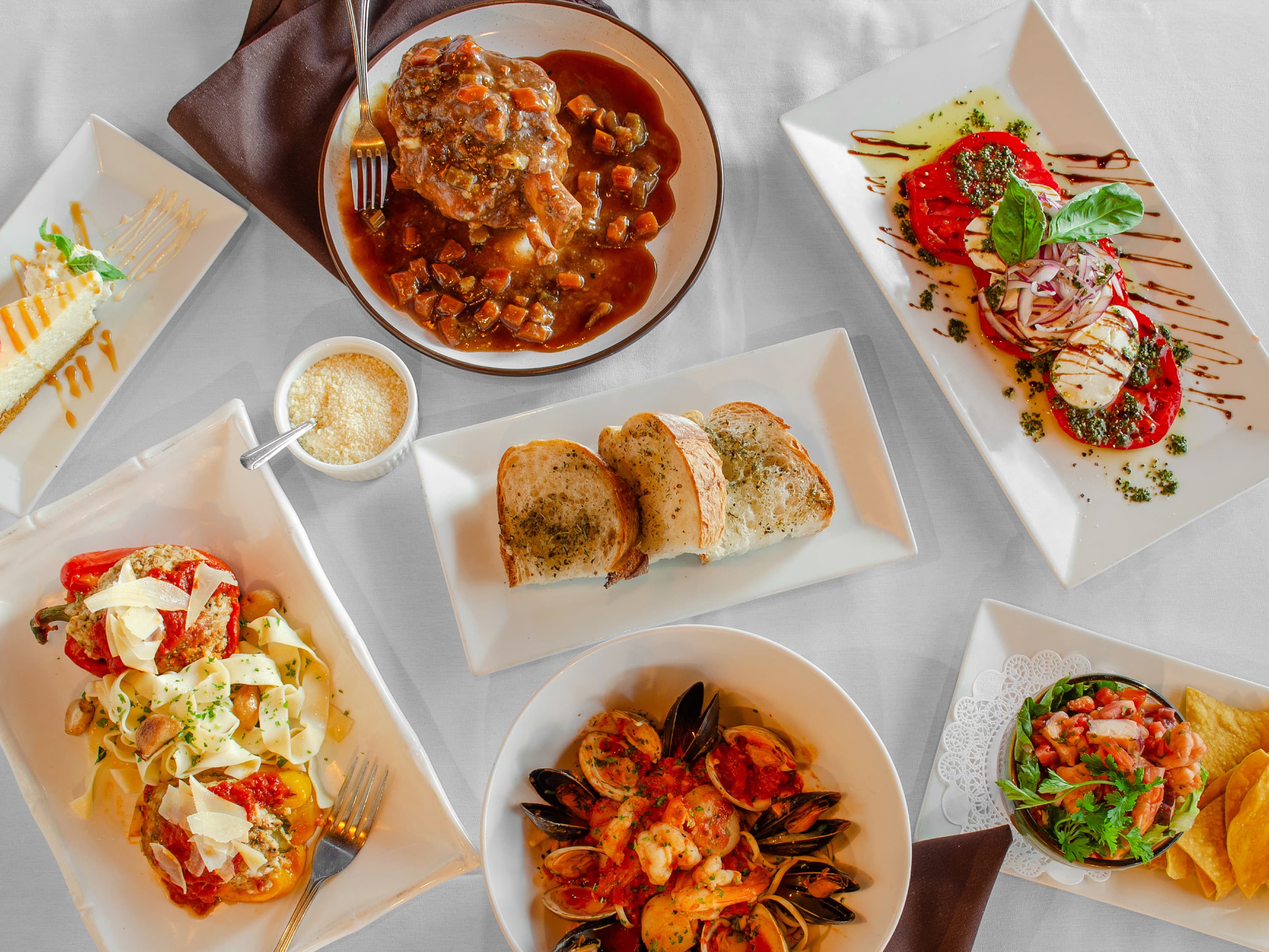
At Sal De Forte's, our appetizer menu features classic Italian antipasti prepared with the freshest ingredients, including our popular Shrimp Ceviche and house-made Stuffed Peppers.
Primi: First Course (Pasta, Risotto & Soup)
In Italian dining, pasta is not the main course—it's the first course (primi). This is perhaps the biggest difference between Italian and Italian-American dining customs. The primi course showcases Italy's incredible variety of pasta shapes, sauces, and regional preparations.
Classic Primi Dishes
Pasta Dishes
- Spaghetti Carbonara
- Fettuccine Alfredo
- Penne alla Vodka
- Linguine with Clam Sauce
- Rigatoni Bolognese
Risotto & Soup
- Risotto ai Funghi (Mushroom)
- Risotto alla Milanese
- Minestrone Soup
- Italian Wedding Soup
- Pasta e Fagioli
Our pasta menu at Sal De Forte's features both classic preparations and house specialties, all made with traditional techniques perfected over our 39 years in business.
Secondi: Main Course (Meat & Seafood)
The secondi is the protein-focused main course of an Italian food menu. This course is where you'll find meat (carne) and fish (pesce) preparations, often simply prepared to let the quality of the ingredients shine.
Meat Dishes (Carne)
- Chicken Parmigiana – Breaded chicken cutlet with marinara and melted mozzarella
- Veal Piccata – Tender veal in a lemon-caper butter sauce
- Veal Saltimbocca – Veal with prosciutto and sage in white wine sauce
- Ossobuco – Braised veal shanks in a rich tomato-wine sauce
- Chicken Marsala – Chicken sauteed with mushrooms in Marsala wine sauce
Seafood Dishes (Pesce)
- Frutti Di Mare – Mixed seafood (shrimp, scallops, clams, mussels) over linguine
- Branzino – Mediterranean sea bass, grilled or baked
- Shrimp Scampi – Shrimp sauteed in garlic, white wine, and butter
- Salmon Piccata – Pan-seared salmon with lemon-caper sauce
Explore our seafood menu, veal specialties, and chicken dishes for authentic Italian secondi preparations.
Dolci: Italian Desserts
No Italian food menu is complete without dolci (desserts). Italian desserts tend to be less heavy than American desserts, often featuring coffee, nuts, and creamy mascarpone or ricotta cheese.
Classic Italian Desserts
- Tiramisu – Espresso-soaked ladyfingers layered with mascarpone cream
- Cannoli – Crispy pastry shells filled with sweet ricotta cream
- Panna Cotta – Silky vanilla cream with berry sauce
- Gelato – Italian-style ice cream in various flavors
- NY Cheesecake – Italian-American classic, rich and creamy
Our dessert menu features house-made Italian sweets including our famous Tiramisu and NY Cheesecake.
How to Order from an Italian Food Menu
You don't need to order every course to enjoy an authentic Italian meal. Here are some common ordering patterns:
Typical Ordering Patterns
- Light meal: Antipasto + Primi (appetizer + pasta)
- Classic dinner: Antipasto + Secondi + Dolci (appetizer + main + dessert)
- Full experience: Antipasto + Primi + Secondi + Dolci (all four courses)
- Sharing style: Multiple antipasti for the table + individual primi or secondi
At Sal De Forte's, our servers are happy to help you navigate our Italian food menu and create the perfect meal for your appetite and preferences.
Frequently Asked Questions About Italian Food Menus
What are the main courses on an Italian food menu?
A traditional Italian food menu consists of several courses: Antipasti (appetizers), Primi (first course - usually pasta, risotto, or soup), Secondi (second course - meat or fish), Contorni (side dishes), and Dolci (desserts). Italian meals are meant to be enjoyed slowly, with each course building on the last.
What is the difference between primi and secondi on an Italian menu?
Primi (first course) typically features pasta, risotto, gnocchi, or soup dishes. Secondi (second course) is the main protein course, featuring meat (carne) or fish (pesce). In Italy, pasta is never the main course—it's always followed by the secondi.
What are the most popular dishes on an Italian food menu?
Popular Italian food menu items include: Bruschetta and Caprese (appetizers), Spaghetti Carbonara and Fettuccine Alfredo (pasta), Chicken Parmigiana and Veal Piccata (main courses), and Tiramisu and Cannoli (desserts). Regional specialties vary across Italy.
Do I have to order every course at an Italian restaurant?
No, you don't need to order every course. Most diners choose 2-3 courses for a complete meal. A popular combination is an antipasto (appetizer), a primo (pasta) or secondo (main), and a dolce (dessert). Your server can help you build a satisfying meal.
Experience Our Italian Food Menu
Now that you understand the structure of an authentic Italian food menu, come experience it at Sal De Forte's Ristorante. Our family has been serving traditional Italian cuisine in Ewing Township since 1985, and we'd be honored to share our recipes with you.