
Italy Food: 26 Traditional Italian Dishes You Must Try
Published on December 1, 2025 | 15 min read | By the Vizzini Family (39 Years of Italian Cooking)
In This Guide
Italy food represents one of the world's most beloved and influential culinary traditions. From the sun-drenched coasts of Sicily to the alpine regions of the north, Italian cuisine is a tapestry of regional flavors, time-honored techniques, and an unwavering commitment to quality ingredients. In this comprehensive guide, we explore 26 traditional dishes, their origins, how to pronounce them correctly, and — best of all — where you can taste authentic Italy food right here in New Jersey without booking a flight.
What is Italy Food?
Italy food, or Italian cuisine (cucina italiana), is characterized by its regional diversity, emphasis on fresh ingredients, and relatively simple preparations that let quality ingredients shine. Unlike cuisines that rely heavily on complex spice blends, Italian cooking celebrates the natural flavors of tomatoes, olive oil, fresh herbs, aged cheeses, and cured meats.
The foundation of Italian cooking rests on what Italians call "la cucina povera" (peasant cooking) — making delicious meals from humble, seasonal ingredients. This philosophy has given us some of the world's most beloved dishes, from simple pasta with garlic and oil to elaborate Sunday ragus simmered for hours.
The History of Italian Cuisine
The story of Italy food spans thousands of years. Ancient Romans were known for elaborate banquets, though they ate quite differently than modern Italians — no tomatoes, no pasta as we know it, and no potatoes. These now-essential ingredients didn't arrive until after Columbus reached the Americas in 1492.
Arab traders left their mark on Sicilian cuisine in the 9th-11th centuries, introducing rice, saffron, citrus fruits, and sugar — ingredients that would become essential to Italian desserts and risottos. The Renaissance brought refined cooking techniques to noble courts, while peasant communities developed the "cucina povera" dishes that form the backbone of Italian home cooking today.
Interestingly, tomatoes weren't widely accepted in Italian cooking until the late 18th century — nearly 300 years after their arrival from the New World. Today, it's impossible to imagine Italian cuisine without them.
Regional Differences: North vs. South
Italy wasn't unified as a country until 1861, which explains why Italian cuisine is really 20 different regional cuisines. The north-south divide is particularly striking:
Northern Italy
- • Butter and cream-based sauces
- • Fresh egg pasta (tagliatelle, tortellini)
- • Risotto and polenta
- • Veal, pork, and beef dishes
- • Rich, hearty flavors
- • White wine in cooking
Southern Italy
- • Olive oil-based sauces
- • Dried pasta (spaghetti, penne)
- • Tomato-forward dishes
- • Fresh seafood and vegetables
- • Bright, Mediterranean flavors
- • Red wine in cooking
The Traditional Italian Meal Structure
A formal Italian meal follows a specific progression that allows diners to savor each course without rushing. Here's the traditional structure:
- 1. Aperitivo — Pre-dinner drink (Aperol Spritz, Negroni, Prosecco)
- 2. Antipasto — Appetizers (bruschetta, calamari, prosciutto)
- 3. Primo — First course (pasta, risotto, or soup)
- 4. Secondo — Main course (meat or fish)
- 5. Contorno — Side dishes (vegetables, salad)
- 6. Formaggi e Frutta — Cheese and fruit
- 7. Dolce — Dessert (tiramisu, cannoli, gelato)
- 8. Caffè — Espresso (never cappuccino after noon!)
- 9. Digestivo — After-dinner drink (limoncello, grappa, amaro)
Experience a Traditional Italian Meal Tonight
At Sal De Forte's, we follow this traditional progression — from aperitivo cocktails at our full bar to house-made tiramisu for dolce. Experience the complete Italian dining ritual just 10 minutes from Princeton.
26 Traditional Italian Dishes You Must Try
From iconic pasta dishes to regional specialties, here are 26 essential Italy food experiences. We've included pronunciation guides so you can order with confidence, plus notes on which dishes you can enjoy at Sal De Forte's.
1. Pizza Margherita
Pronunciation: PEET-sah mar-geh-REE-tah
The iconic Neapolitan pizza with San Marzano tomatoes, fresh mozzarella, basil, and olive oil on a thin, charred crust.
2. Spaghetti Carbonara
Pronunciation: kar-boh-NAH-rah
Pasta with egg, pecorino romano, guanciale (cured pork cheek), and black pepper. Never made with cream in authentic versions.
3. Lasagna Bolognese
Pronunciation: lah-ZAHN-yah boh-loh-NYEH-zeh
Layers of fresh pasta, slow-cooked meat ragu, bechamel sauce, and Parmigiano-Reggiano cheese.
4. Risotto alla Milanese
Pronunciation: ree-ZOT-toh ah-lah mee-lah-NEH-zeh
Creamy arborio rice infused with saffron, bone marrow, and Parmigiano. Golden-colored and luxuriously rich.
5. Osso Buco
Pronunciation: AW-soh BOO-koh
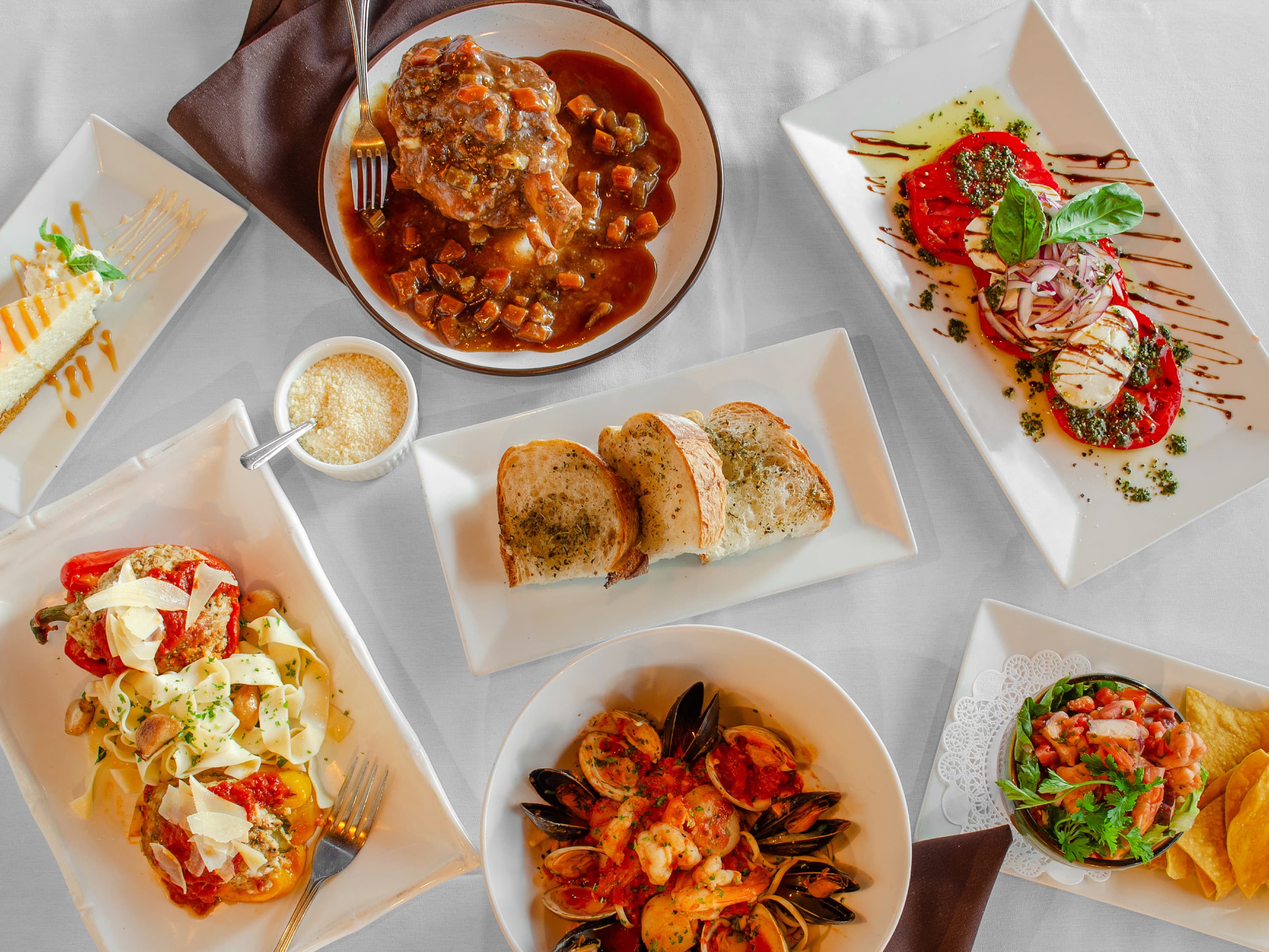
Braised veal shanks in white wine with vegetables, topped with gremolata. The marrow is the prized bite.
6. Cacio e Pepe
Pronunciation: KAH-choh eh PEH-peh
Deceptively simple pasta with pecorino romano and black pepper. Technique-dependent and beloved by Romans.
7. Frutti di Mare
Pronunciation: FROOT-tee dee MAH-reh
Mixed seafood over pasta featuring clams, mussels, shrimp, and calamari in white wine or marinara sauce.
8. Veal Marsala
Pronunciation: mar-SAH-lah
Tender veal cutlets in sweet Marsala wine sauce with mushrooms. A Sicilian classic now beloved worldwide.
9. Chicken Parmigiana
Pronunciation: par-mee-JAH-nah
Breaded chicken breast topped with marinara and melted mozzarella. An Italian-American evolution of eggplant parmigiana.
10. Eggplant Parmigiana
Pronunciation: par-mee-JAH-nah
Layers of fried eggplant, tomato sauce, and mozzarella. The original 'parmigiana' that inspired the chicken version.
11. Veal Saltimbocca
Pronunciation: sahl-teem-BOH-kah
Veal wrapped with prosciutto and sage, meaning 'jumps in the mouth.' Pan-fried in butter and white wine.
12. Shrimp Scampi
Pronunciation: SKAHM-pee
Shrimp sauteed in garlic, butter, white wine, and lemon. Served over linguine or with crusty bread.
13. Calamari Fritti
Pronunciation: kah-lah-MAH-ree FREET-tee
Lightly battered and fried squid rings served with marinara sauce. A beloved antipasto throughout Italy.
14. Bruschetta
Pronunciation: broo-SKET-tah
Grilled bread rubbed with garlic and topped with fresh tomatoes, basil, and olive oil. Note: it's broo-SKET-tah, not broo-SHEH-tah.
15. Caprese Salad
Pronunciation: kah-PREH-zeh
Fresh mozzarella, ripe tomatoes, and basil drizzled with olive oil. Named after the island of Capri.
16. Prosciutto e Melone
Pronunciation: proh-SHOO-toh eh meh-LOH-neh
Paper-thin prosciutto di Parma draped over sweet cantaloupe. The perfect balance of salty and sweet.
17. Minestrone
Pronunciation: mee-neh-STROH-neh
Hearty vegetable soup with beans, pasta, and seasonal vegetables. Every Italian family has their own recipe.
18. Gnocchi
Pronunciation: NYOH-kee
Soft potato dumplings served with various sauces. When made right, they're pillowy and melt in your mouth.
19. Ravioli
Pronunciation: rah-vee-OH-lee
Stuffed pasta pillows with cheese, meat, or vegetable fillings. Each region has signature variations.
20. Fettuccine Alfredo
Pronunciation: feh-too-CHEE-neh ahl-FREH-doh
Ribbon pasta with butter and Parmigiano. The American version adds cream; the Roman original does not.
21. Penne Arrabbiata
Pronunciation: PEN-neh ah-rah-bee-AH-tah
Penne in spicy tomato sauce with garlic and red pepper flakes. 'Arrabbiata' means 'angry' for the heat.
22. Bistecca alla Fiorentina
Pronunciation: bee-STEK-kah ah-lah fyor-en-TEE-nah
Massive T-bone steak from Chianina cattle, grilled rare over wood fire. Served by weight, shared between two.
23. Vitello Tonnato
Pronunciation: vee-TEL-loh toh-NAH-toh
Chilled sliced veal with creamy tuna-caper sauce. A summer favorite in Northern Italy.
24. Arancini
Pronunciation: ah-rahn-CHEE-nee
Fried rice balls stuffed with ragu, mozzarella, and peas. 'Little oranges' for their golden color and shape.
25. Tiramisu
Pronunciation: tee-rah-mee-SOO
Espresso-soaked ladyfingers layered with mascarpone cream and cocoa. Means 'pick me up' for the coffee.
26. Cannoli
Pronunciation: kah-NOH-lee
Crispy fried pastry tubes filled with sweet ricotta cream. Often topped with pistachios or chocolate chips.
Italian Wine Pairing Guide
In Italy, wine isn't an afterthought — it's an essential part of the meal. The Italian philosophy is "what grows together, goes together," meaning wines from a region pair naturally with that region's dishes.
Red Wine Pairings
- Chianti: Tomato-based pasta, lasagna, chicken parm
- Barolo: Osso buco, veal, rich meat dishes
- Montepulciano: Grilled meats, hearty pasta
- Amarone: Game meats, aged cheeses
White Wine Pairings
- Pinot Grigio: Seafood, light pasta, salads
- Vermentino: Frutti di mare, grilled fish
- Soave: Risotto, cream sauces
- Prosecco: Aperitivo, fried appetizers
Full Bar at Sal De Forte's
Unlike many BYOB Italian restaurants in the area, we have a full liquor license with an extensive Italian wine selection, classic cocktails (Aperol Spritz, Negroni, Limoncello Martini), and premium spirits. Our staff can help you find the perfect pairing for your meal.
View Our Wine List →Frequently Asked Questions About Italy Food
What are the 5 most popular Italian dishes?
The five most popular Italian dishes worldwide are: Pizza Margherita (Naples), Spaghetti Carbonara (Rome), Lasagna Bolognese (Bologna), Risotto alla Milanese (Milan), and Tiramisu (Veneto). Each represents a different region's culinary traditions and has achieved global recognition.
Is Italian food healthy?
Yes! Traditional Italian cuisine forms the basis of the Mediterranean diet, recognized by health experts as one of the healthiest eating patterns. It emphasizes olive oil over butter, fresh vegetables, legumes, moderate wine consumption, and lean proteins like fish. The key is eating like Italians do — reasonable portions, quality ingredients, and enjoying meals slowly with family.
What's the difference between Italian and Italian-American food?
Italian-American cuisine evolved when Italian immigrants adapted their recipes to available American ingredients. Spaghetti and meatballs, chicken parmigiana, and fettuccine alfredo (with cream) are Italian-American creations. Traditional Italian dishes tend to be simpler with fewer ingredients, while Italian-American versions are often heartier with larger portions.
Where can I find authentic Italian food near me in New Jersey?
For authentic Italian food in New Jersey, Sal De Forte's Ristorante has served the Ewing Township area since 1985. Located at 1400 Parkway Ave, just 10 minutes from Princeton and 7 minutes from Trenton, we offer fresh-made pasta, seafood specialties, and traditional dishes passed down through the Vizzini family. Call (609) 406-0123 for reservations.
Experience Italy Food Without the Flight
You don't need a passport to taste authentic Italian cuisine. For 39 years, Sal De Forte's has brought the flavors of Italy to central New Jersey. From fresh-made pasta to seafood specialties, from traditional veal dishes to house-made tiramisu — experience the complete Italian dining tradition at our table.
Sal De Forte's Ristorante | 1400 Parkway Ave, Ewing Township, NJ 08628 | (609) 406-0123